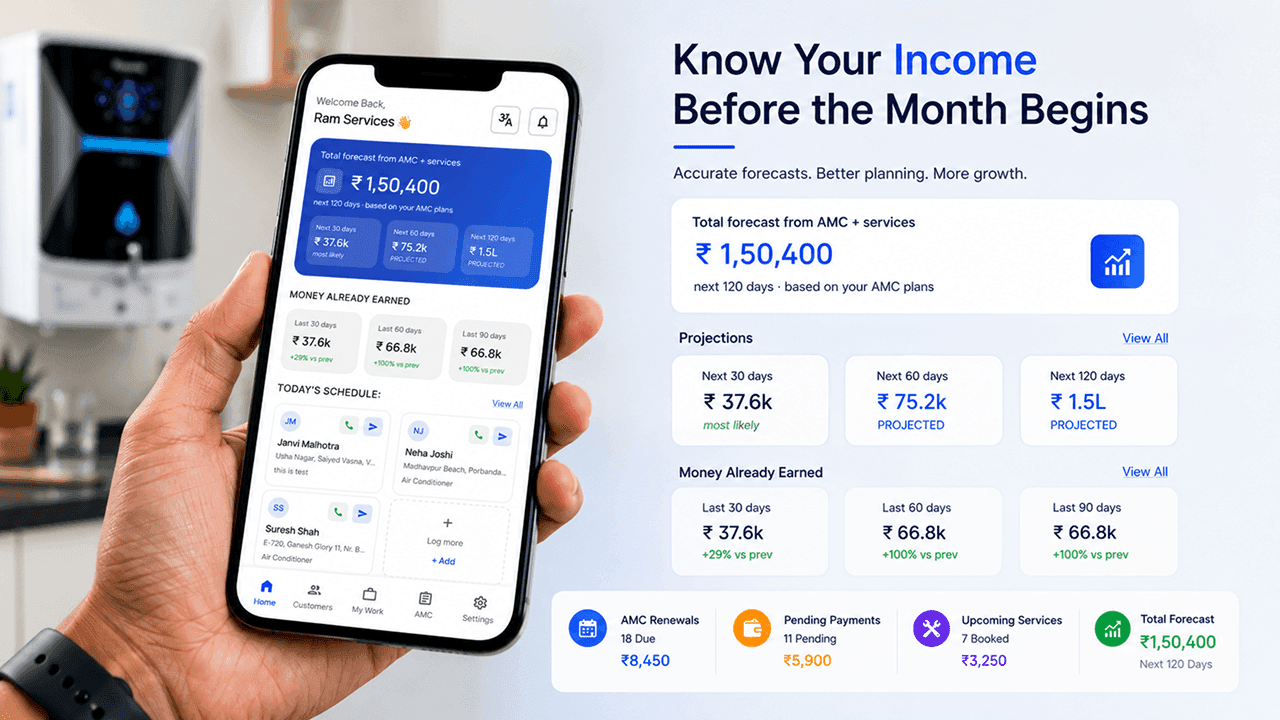

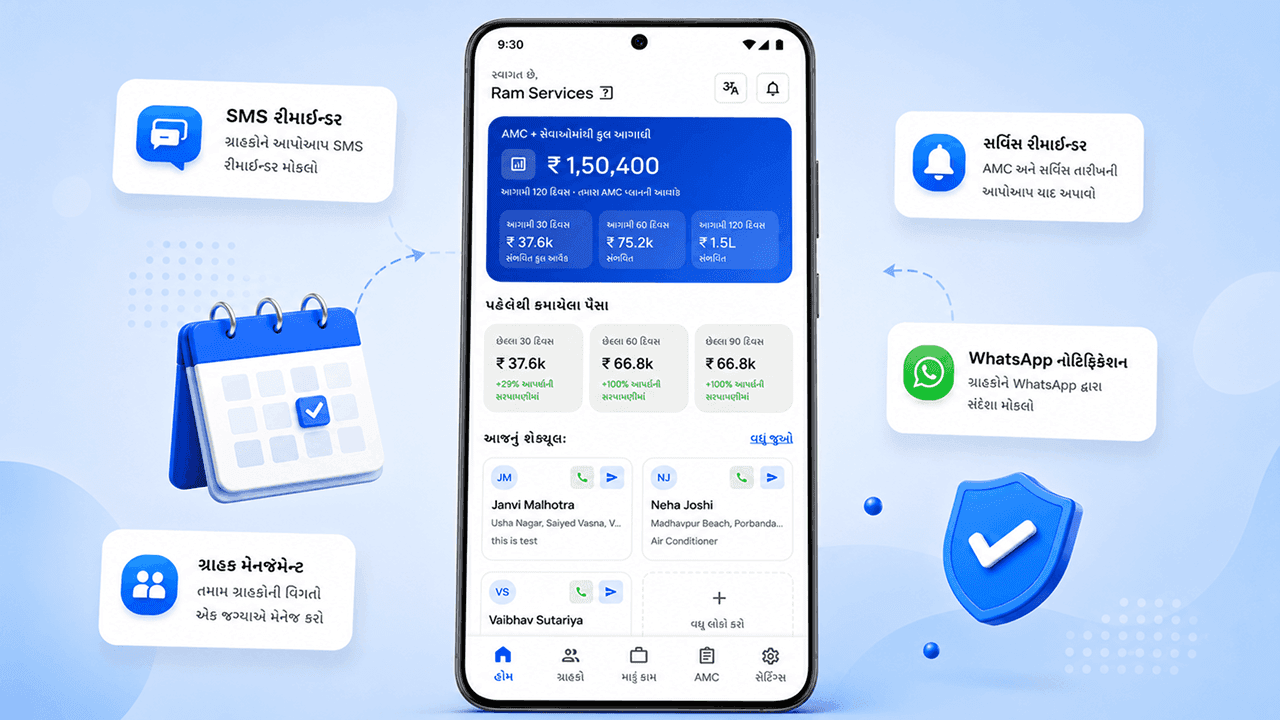
For most Indian service vendors - RO technicians, AC repair professionals, electricians - the Annual Maintenance Contract (AMC) is the closest thing they have to predictable, recurring revenue. Yet in our conversations with 300+ vendors using VendoNX, one pattern shows up again and again: AMC contracts don't get cancelled, they simply lapse silently.
“I never lost a customer on purpose. I just forgot to call them before the contract ended.”
Why renewals quietly slip through the cracks
It's rarely one big mistake. It's usually a small gap repeated across dozens of customers: the vendor is busy on a job the week a contract expires, there's no reminder set, and the customer - who has even less reason to track the date than the vendor does - simply assumes someone will call. By the time either side notices, the contract has already lapsed and the relationship has gone cold.
The five strategies below aren't complicated. Most vendors already know they should be doing them. The difference is turning them into a repeatable process instead of something you remember to do only when business is slow.
1. Track every AMC end date in one place
A notebook works fine until you have more than 15-20 active contracts. The fix isn't a fancier notebook - it's moving every AMC start and end date into a single digital record you can scan in seconds. Read our guide on income forecasting for service vendors to see how this connects to predictable monthly income.
2. Set a 30-day early warning, not a same-day reminder
By the time a contract expires, it's already too late to renew gracefully. Vendors who alert themselves 30 days before expiry have time to call, negotiate, and schedule a renewal visit - instead of reacting to a contract that has already lapsed.
- Flag contracts expiring in the next 30 days automatically.
- Call the customer before they call someone else.
- Offer the renewal at the visit - don't wait for a separate follow-up.
3. Make the renewal conversation part of the last service visit
The best time to talk about renewing isn't a cold call three weeks later - it's the final service visit under the current contract. The customer already sees the value in front of them.
4. Track renewal rate as a real number
You cannot improve what you don't measure. Even a rough monthly renewal percentage - renewed contracts divided by contracts due - tells you whether your follow-up process is actually working.
5. Don't let a missed renewal feel like a lost customer
A lapsed AMC isn't a lost customer - it's a follow-up you haven't made yet. Vendors using VendoNX's 30-day AMC alerts recover contracts they would have otherwise written off completely.
A simple 90-day renewal checklist
If you want a routine you can actually stick to, work backward from the expiry date instead of forward from today:
- Day -90: Contract shows up on your renewal list automatically.
- Day -30: First call - confirm the customer is happy and mention the upcoming renewal.
- Day -15: Second follow-up with the renewal offer, tied to the next scheduled visit.
- Day 0: Contract lapses - send a short, low-pressure win-back message the same day.
- Day +7: No response yet? Mark it as at-risk and try a different channel (call instead of message, or vice versa).
Frequently asked questions
What if a customer says they'll renew later?
Take the soft "yes" and set a firm follow-up date - don't leave it open-ended. "Later" without a date attached is how renewals quietly disappear in the first place.
How much can a better renewal process actually improve retention?
Vendors who move from ad-hoc reminders to a 30-day early-warning system consistently report renewal rates in the high 80s to low 90s (%), up from well under 70% when renewals were tracked manually.
Do I need software to do this, or can I use a spreadsheet?
A spreadsheet works if you're disciplined enough to open it daily. In practice, most vendors get better results from a tool that surfaces expiring contracts on its own rather than one that requires remembering to check.